Base preparation in Miami requires addressing unstable aggregate layers before laying driveways, structural footings, or asphalt surfaces. In sub-tropical zones near Biscayne Bay, including Edgewater, Brickell, and…
Base preparation in Miami requires addressing unstable aggregate layers before laying driveways, structural footings, or asphalt surfaces. In sub-tropical zones near Biscayne Bay, including Edgewater, Brickell, and Coconut Grove, native fill often mixes dense sand with porous oolitic limestone. A standard hand tamper cannot achieve the 95% to 98% Standard Proctor density required by structural engineering codes; dynamic centrifugal force is mandatory to eliminate subterranean air voids that cause settling once saturated by heavy seasonal rain.
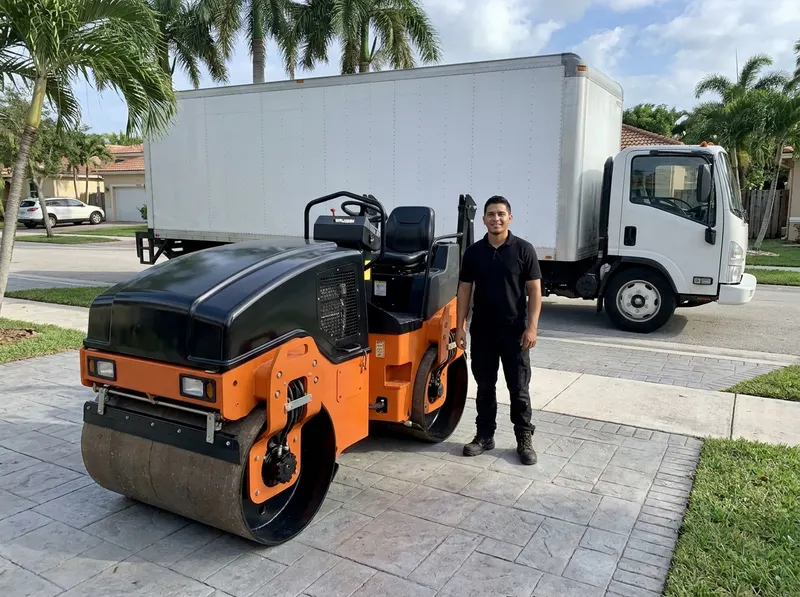
Selecting the correct compaction profile depends directly on your material grain size and clearance constraints. A forward vibratory plate compactor delivers between 3,000 and 5,000 pounds of centrifugal force, which excites granular particles like crushed concrete and lime rock base to settle them into a locked matrix. For cohesive clays or utility trenches dug through Allapattah, Little Havana, and Overtown, an upright jumping jack rammer is required instead; it uses direct impact stroke energy rather than high-frequency vibration to compress clay-rich subgrade. For final hot-mix asphalt repair or extensive parking bay repaving near the Design District, Wynwood, and the Upper Eastside, a smooth dual-drum roller prevents surface tracking while an onboard water tank and sprinkler bar keep sticky bitumen from lifting onto the steel drums.
Equipment staging requires clear operational planning on tight residential and commercial properties. A walk-behind plate compactor navigates narrow side-yards along Coral Way without cracking existing stamped borders or decorative concrete pavers. When heavier asphalt rollers or large reversible plates are required, transport trailers need adequate street clearance for unloading along municipal right-of-ways. Booking requires matching the rated centrifugal force to the thickness of each lift: a standard 200-pound plate handles aggregate depths up to 6 inches, whereas lifts exceeding 10 inches require a reversible plate or ride-on roller to prevent soft bridging in the lower subgrade.
Every job gets a firm, written price after a free on-site visit.
Tell us about your soil & asphalt compactor rental job in Miami and we'll send a clear, written quote, usually the same day.
 Driftwood Dumpster Rental