Scissor lift rental provides vertical platform stability for MEP trades, drywall crews, and exterior painting contractors navigating strict project deadlines. Electric slab scissor lifts run on zero-emission 24-volt or…
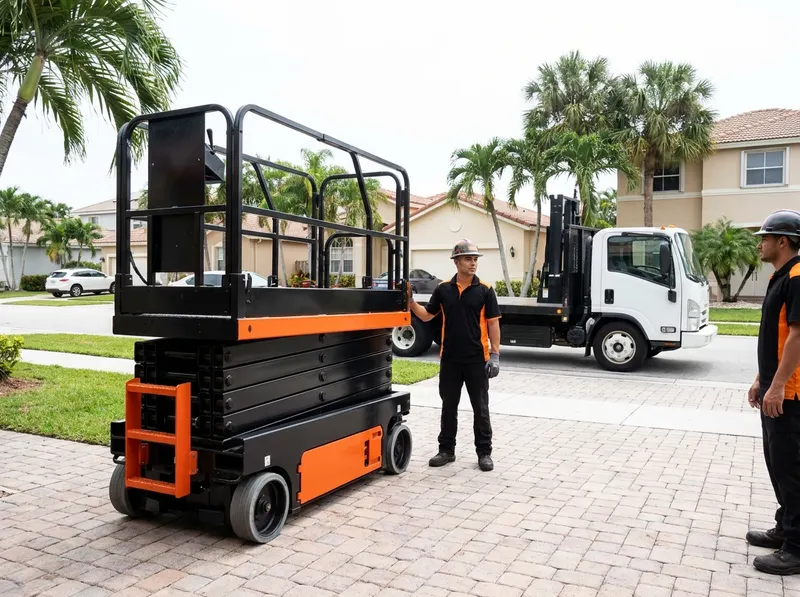
Scissor lift rental provides vertical platform stability for MEP trades, drywall crews, and exterior painting contractors navigating strict project deadlines. Electric slab scissor lifts run on zero-emission 24-volt or 48-volt battery banks, featuring narrow 30-inch to 46-inch chassis profiles that clear standard commercial double doors in dense Brickell office towers and Edgewater high-rises. In contrast, outdoor rough-terrain units feature four-wheel drive, dual-fuel or diesel engines, and integrated hydraulic outriggers designed to level out on loose sand, gravel staging yards, and unfinished ground common to Allapattah warehouse builds and Wynwood adaptive-reuse projects. Selecting an indoor electric model on an unpaved outdoor surface leads to tire rutting and ground-fault lockouts, while mobilizing a 40-foot rough-terrain unit for interior work creates doorway clearance failures and surface weight limit violations on finished commercial flooring.
Ground pressure management remains essential on South Florida construction sites due to porous limestone sub-bases and hot asphalt prone to indentation under point-load pressure. A standard 19-foot electric scissor lift carries an operating weight of roughly 3,300 pounds across four solid tires, concentrating load pressure on structural slabs. Deliveries to retail redevelopments near the Design District and Upper Eastside commercial strips utilize protective heavy-duty polyurethane composite outrigger pads and runner boards to distribute machine mass and prevent surface cracking on stamped concrete or decorative pavers. Operators must also account for wind-load limits: standard exterior-rated scissor lifts automatically restrict platform elevation when ambient gusts reach 28 miles per hour, an operational condition frequent along coastal Biscayne Bay and exposed marine projects near PortMiami.
Securing access across Miami-Dade County requires factoring in street staging realities. When equipment drop-offs occur on public rights-of-way rather than private property in tight corridors like Little Havana, Overtown, or Coral Way, a City of Miami right-of-way permit is required prior to staging. Renting contractors avoid downtime by booking drops during off-peak traffic hours to bypass congestion along the Dolphin Expressway and I-95. A five-step sequence completes each delivery: Step 1 involves platform specification matching your target working ceiling; Step 2 establishes delivery timing; Step 3 clears ground paths to ensure 8-foot minimum overhead clearance; Step 4 confirms charging source access on-site (standard 110V 15A or 20A circuit); Step 5 finishes with an operational function test before sign-off.
Every job gets a firm, written price after a free on-site visit.
Tell us about your scissor lift rental job in Miami and we'll send a clear, written quote, usually the same day.
 Driftwood Dumpster Rental