Pouring, cutting, and breaking slab foundations in South Florida demands commercial machinery built for limestone aggregate and humid atmospheric cure cycles. Concrete & masonry tool rental equips urban job sites along…
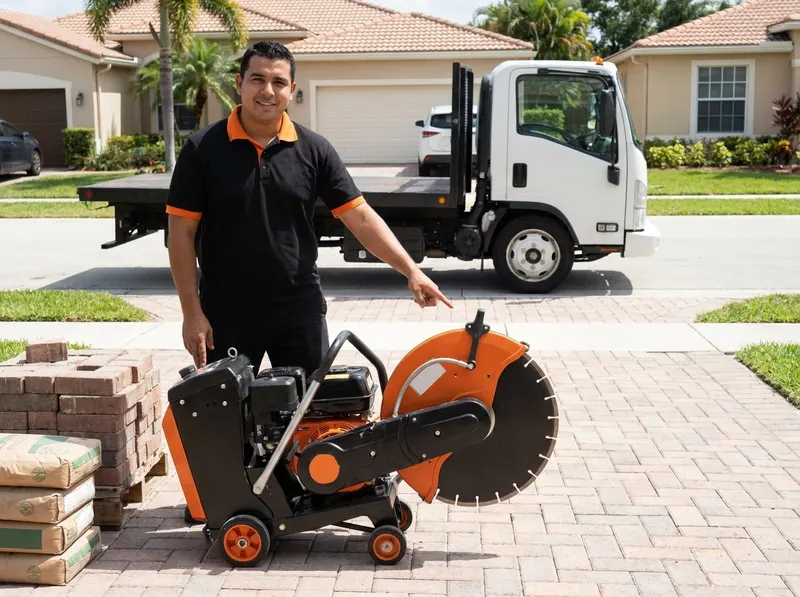
Pouring, cutting, and breaking slab foundations in South Florida demands commercial machinery built for limestone aggregate and humid atmospheric cure cycles. Concrete & masonry tool rental equips urban job sites along Coral Way, Wynwood, and Little Havana with heavy-duty walk-behind saws, diamond-core drills, and pneumatic breaking rigs without the capital overhead of fleet ownership. Staging heavy machinery requires precise logistics on tight residential easements near Brickell or historic residential lots in Coconut Grove. When removing a 4-inch patio slab, a handheld 14-inch electric saw cuts perimeter expansion joints without exhaust buildup in covered carports, while a 60-pound electric breaker busts structural footings. The operational trade-off centers on power delivery versus footprint: hydraulic breaking attachments crush high-PSI slabs faster, but standard 120-volt electric demolition hammers eliminate dedicated generator trailers on crowded Edgewater curb lines.
Demolition schedules in Miami-Dade County hinge on local structural realities. Wet-cutting with 14-inch diamond blades suppresses fine silica dust to maintain active compliance with municipal air-quality rules around Overtown and the Design District, while also mitigating rapid blade heat buildup against dense river gravel mix designs. Using a mechanical plate compactor over porous oolitic limestone fill requires 3,000 to 4,500 pounds of centrifugal compaction force before setting forms for driveways or walkway extensions. Failing to run uniform mechanical passes across wet sub-base leads to settled pavers and fractured slabs within three rainy seasons.
Equipment staging requires clear spatial planning to avoid property damage. High-torque mixers and heavy vibratory plates arrive strapped to heavy-duty utility beds, unloaded directly onto structural wood planking to protect paver driveways and decorative asphalt. 1. Delivery coordinates via direct driver routing along US-1 and Interstate 95. 2. Operators verify on-site 20-amp circuits or align diesel auxiliary generators prior to tool drop. 3. Machinery undergoes a fluid, throttle, and safety trigger inspection on-site. 4. Work progresses through demolition, pouring, and curing phases. 5. Equipment is power-washed free of wet mortar slurry before the scheduled pickup window.
Every job gets a firm, written price after a free on-site visit.
Tell us about your concrete & masonry tool rental job in Miami and we'll send a clear, written quote, usually the same day.
 Driftwood Dumpster Rental